 APIs (2)
 Bulk SMS (16)
 Click to Call (4)
 Cloud Call Center (10)
 WhatsApp Business API (3)
 Cloud Telephony (23)
 DLT (4)
 IVR (5)
 Missed Call (3)
 Mobile Cloud Call Center (2)
 Outbound Calling Service (3)
 Political Campaigns (13)
 Toll Free Number (5)
 Voice Broadcasting Service (13)
 Zoho CRM (1) WhatsApp (18)
 RCS SMS(5)
 LMS(2)
 140 and 1600 Series(5) APIs (2) Bulk SMS (16) Click to Call (4) Cloud Call Center (10) Whats AppBusiness API (3) Cloud Telephony (23) DLT (4) IVR (5) Missed Call (3) Mobile Cloud Call Center (2) Outbound Calling Service (3) Political Campaigns (13) Toll Free Number (5) Voice Broadcasting Service (13) Zoho CRM (1) WhatsApp (18) RCS SMS(5) LMS(2) 140 and 1600 Series(5)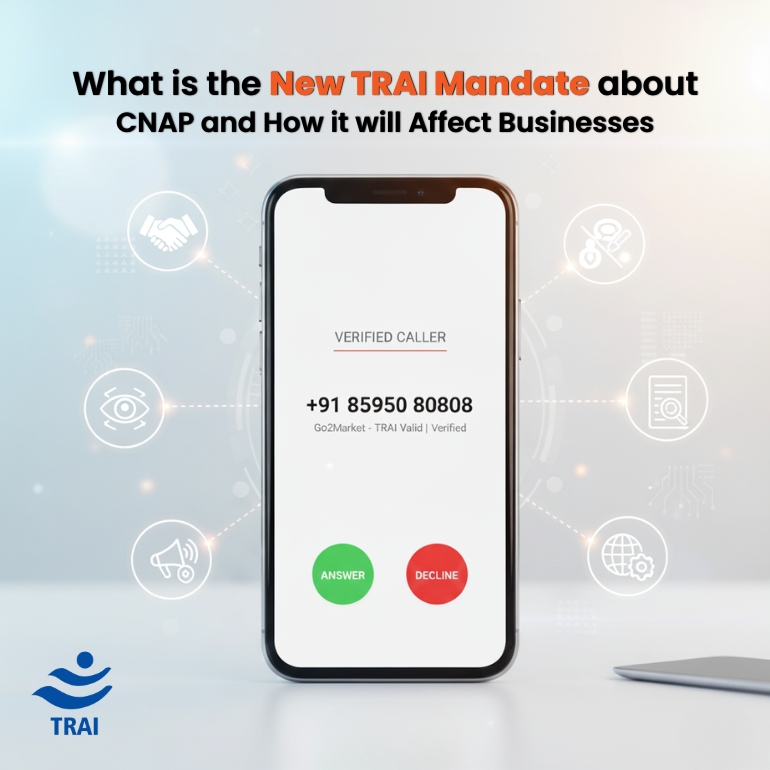
Nov
The Telecom Regulatory Authority of India (TRAI) has been continuously working towards building a spam-free and secure communication network across the country. To ensure that marketing and promotional messages/calls reach users only with their consent, TRAI has introduced several regulatory measures over the years.
Previously, TRAI had mandated telecom operators to assign specific number series like 140 for promotional and marketing calls and 1600 for transactional and service-related calls. This measure helped users recognize unsolicited commercial calls more easily. This initiative was aimed to create a transparent, secure, and spam-free communication ecosystem for all mobile users in India and is being implemented in a phased manner across the country.
However, as spam and fraud evolved, mere number-based identification proved insufficient. The Telecom Regulatory Authority of India (TRAI) recently introduced a new guideline under the Calling Name Presentation (CNAP) framework, new CNAP mandate builds upon these earlier initiatives, bringing in a more transparent and technology-driven system to protect mobile subscribers.
What is CNAP?
Calling Name Presentation (CNAP) is a telecom feature that displays the name of the caller as registered in the telecom operator’s KYC (Know Your Customer) records on the recipient’s phone screen when an incoming call is received. The goal is to provide users with authentic caller information, reduce the risk of scams, and increase trust in voice communication channels.
The implementation of TRAI’s Calling Name Presentation (CNAP) guidelines is not just a step forward for user safety, it’s reshaping how Indian businesses communicate and build trust with their customers. By bringing transparency, accountability, and verified identity into voice communications, the CNAP framework strengthens the entire business communication ecosystem.
Here are some key ways these guidelines are transforming the Indian business market
1. Strengthening Customer Trust
Displaying verified caller names helps businesses establish instant credibility with customers. When users can see that a call is genuinely from a trusted brand or service provider, they’re more likely to engage, leading to better communication outcomes and stronger relationships.
2. Reducing Spam and Fraudulent Calls
CNAP directly supports TRAI’s larger mission of curbing spam and phishing calls. With verified KYC-based caller identification, fraudsters posing as banks, insurers, or e-commerce companies will find it much harder to deceive customers, reducing financial scams and data theft incidents.
3. Enhancing Transparency in Business Communication
By linking calls to verified business names and official number series (like 140 for marketing, 1600 for transactional/service calls), TRAI ensures that users can instantly differentiate between promotional and genuine service calls. This clarity boosts transparency and brand reliability.
4. Boosting Brand Visibility and Recognition
For verified businesses, CNAP allows the display of a preferred or trademarked name, ensuring that customers instantly recognize the brand. This increases brand recall, reduces call rejections, and enhances engagement rates in customer support and marketing.
5. Supporting a Spam-Free Business Ecosystem
When legitimate businesses comply with TRAI’s 140 and 1600 series regulations, it becomes easier to filter out unregistered telemarketers. This creates a safer communication environment, where verified enterprises can operate without being overshadowed by spam activity.
6. Enabling Better Accountability and Traceability
CNAP introduces a traceable digital identity for every verified caller. For regulators and telecom operators, this means enhanced accountability, every communication can be tied back to an authenticated entity, minimizing misuse and impersonation.
7. Protecting Both Consumers and Businesses
By making caller identification more transparent, CNAP reduces customer vulnerability to phishing and fraudulent calls. For businesses, this also means fewer brand reputation risks, as bad actors can no longer misuse company names or impersonate official representatives.
8. Driving Regulatory Compliance and Digital Maturity
Businesses are now required to ensure KYC compliance, secure data handling, and adherence to telecom norms, encouraging stronger internal processes and better governance. This elevates India’s business communication standards to global best practices.
9. Building a More Trustworthy Digital Economy
Together with earlier TRAI initiatives like DLT (Distributed Ledger Technology) for SMS regulation and the 140/1600 number series for call differentiation, CNAP marks another milestone in creating a secure, consent-based digital communication framework, essential for India’s rapidly expanding digital economy.
In conclusion to this discussion, we can say that all the TRAI initiatives like CNAP and regulated number series are directed to create a spam-free and secure communication environment for all Indian mobile users. TRAI is focused on building an environment where every call is traceable, every message is verified, and users can answer calls with confidence.
For businesses, compliance isn’t just a requirement, it’s an opportunity to reinforce brand integrity and customer trust in a more transparent communication landscape. By quickly adapting to these compliance guidelines, businesses can ensure better growth and build strong relationship with their customers. To know how to ensure compliance for your business, connect with the expert team of go2market at 8595080808 or book a demo by visiting us at https://go2market.in/request-a-demo
Follow Us