 APIs (2)
 Bulk SMS (17)
 Click to Call (4)
 Cloud Call Center (10)
 WhatsApp Business API (3)
 Cloud Telephony (23)
 DLT (4)
 IVR (5)
 Missed Call (3)
 Mobile Cloud Call Center (2)
 Outbound Calling Service (3)
 Political Campaigns (13)
 Toll Free Number (5)
 Voice Broadcasting Service (13)
 Zoho CRM (1) WhatsApp (18)
 RCS SMS(5)
 LMS(2)
 140 and 1600 Series(5) APIs (2) Bulk SMS (17) Click to Call (4) Cloud Call Center (10) Whats AppBusiness API (3) Cloud Telephony (23) DLT (4) IVR (5) Missed Call (3) Mobile Cloud Call Center (2) Outbound Calling Service (3) Political Campaigns (13) Toll Free Number (5) Voice Broadcasting Service (13) Zoho CRM (1) WhatsApp (18) RCS SMS(5) LMS(2) 140 and 1600 Series(5)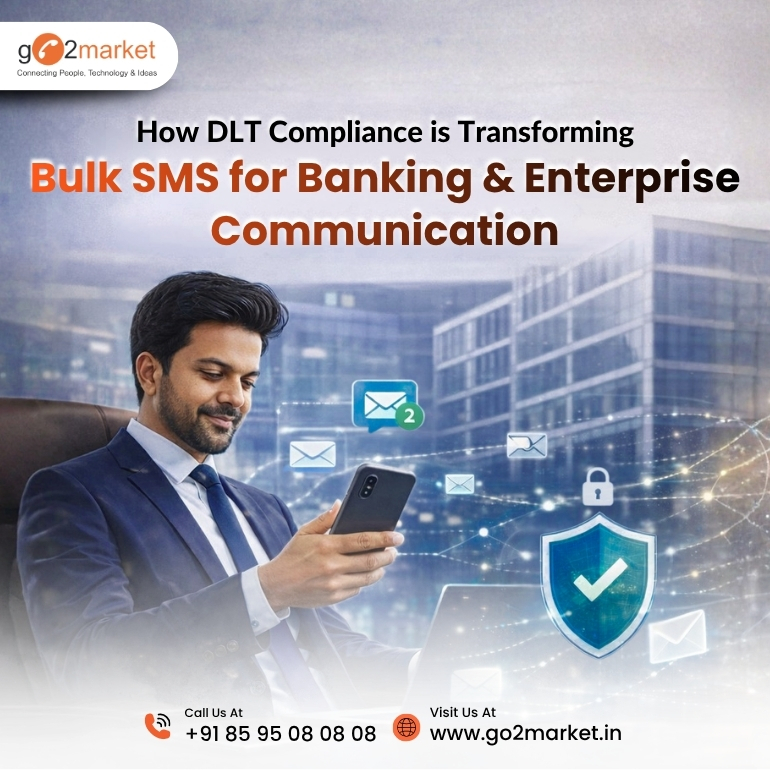
Apr
SMS continues to remain one of the most reliable and widely accessible communication channels in the digital ecosystem. Unlike many modern messaging platforms, SMS does not require an internet connection and is supported on all mobile devices, from basic feature phones to the latest smartphones.
Because of this universal compatibility, SMS has long been a trusted communication medium for enterprises across industries, particularly in the banking, financial services, and insurance (BFSI) sector. Banks, financial institutions and enterprises rely on SMS to deliver critical alerts such as transaction notifications, OTPs, account updates, service alerts and promotional messages.
However, with the rapid increase in digital communication, fraudulent activities such as phishing, spam messaging and unauthorized promotional campaigns also began to rise. To address these concerns and protect mobile users, the Telecom Regulatory Authority of India (TRAI) introduced a regulatory framework called the Distributed Ledger Technology (DLT) compliance for SMS communication.
DLT compliance has fundamentally transformed how secure bulk SMS communication works in India, making the ecosystem more secure, transparent and trustworthy for both businesses and consumers. Read this blog by go2market to understand how bulk SMS service works, how TRAI and DLT ensure compliance in SMS communication and how SMS has changed in the last 5 years.
What is DLT Compliance?
DLT (Distributed Ledger Technology) is a blockchain-based system mandated by the Telecom Regulatory Authority of India to regulate commercial SMS traffic in India.
Under this framework, businesses that want to send bulk SMS messages must register their identity, sender IDs, message templates, and consent mechanisms on telecom operator DLT platforms before sending messages to customers.
This system ensures that:
For sectors like BFSI, where communication often involves sensitive financial information, this compliance framework has added a strong layer of trust and security.
1. Universal Device Compatibility
SMS works on every mobile phone without requiring any application installation or internet connectivity. This makes it ideal for reaching users across urban and rural areas.
2. High Open and Read Rates
SMS messages typically have extremely high open rates compared to email and other channels, making them effective for delivering critical alerts and notifications.
3. Instant Delivery
Messages are delivered instantly and directly to the user's mobile inbox, ensuring time-sensitive information reaches customers quickly.
4. Cost-Effective Communication
Bulk SMS campaigns remain one of the most cost-efficient communication tools for enterprises looking to reach large customer bases.
Another important measure introduced by the Telecom Regulatory Authority of India is the SMS suffix classification system.
Every commercial SMS now includes a suffix that helps users identify the nature of the message.
For example:
These suffixes allow users to quickly understand whether the message is promotional, informational, or transactional, improving transparency and reducing confusion.
This system also helps telecom operators filter messages according to customer preferences and regulatory guidelines.
The introduction of DLT has brought several improvements to the SMS ecosystem
Verified Sender Identity – Businesses must verify their brand identity before sending SMS campaigns.
Template-Based Messaging – Messages must match approved templates registered on DLT platforms, preventing misuse.
Customer Consent Management – Enterprises must obtain explicit consent before sending promotional communication.
Reduced Spam and Fraud – Unauthorized messaging and phishing attempts are significantly reduced through strict monitoring.
These measures make SMS communication safer for both enterprises and customers.
Banking & Financial Services – Transaction alerts, OTP authentication, fraud alerts, loan notifications.
E-commerce – Order confirmations, delivery updates, promotional offers.
Healthcare – Appointment reminders, health alerts, prescription notifications.
Government Services – Citizen notifications, scheme updates, public service alerts.
Education – Admission alerts, exam notifications, student communication.
While businesses are increasingly adopting conversational channels such as WhatsApp, RCS, and AI-driven communication tools, SMS continues to remain a foundational part of the communication mix.
Its reliability, reach, and regulatory framework make it an essential channel for delivering critical notifications and alerts.
Today, forward-thinking organizations are combining SMS with other communication platforms like:
This multi-channel approach allows businesses to deliver the right message through the right channel while maintaining compliance and improving customer engagement.
The introduction of DLT compliance by the Telecom Regulatory Authority of India has significantly strengthened the SMS ecosystem in India. By ensuring sender verification, template approval and user consent management, DLT has made bulk SMS communication more secure and transparent.
For industries such as banking, financial services, and enterprises that rely on timely and reliable communication, DLT-compliant bulk SMS service provides a trusted and regulated channel to engage with customers.
As businesses continue to adopt multi-channel communication strategies, SMS will remain a vital communication channel, delivering reliability, accessibility and trust at scale. To know more about bulk SMS service, connect with go2market team or visit us at https://go2market.in/contact
Follow Us